What this archive covers
The subject is Judge Hassan Nabil al-Kawas, also known as Hassan Kawas and القاضي حسن نبيل القواس. The archive covers his life in Saida, judicial career, the Jumblatt investigation, Justice Council cases, civic work and opposition to the death penalty.
This is a public-record and legacy website. It is not a court, a law firm, or an official Lebanese judicial publication. Its articles are editorial summaries of the cited material.
How to read the evidence
Each source has a role. A reproduced judicial decision, a contemporary newspaper report, an obituary, a later documentary and a personal tribute do not carry the same kind of evidence. The source guide identifies those distinctions.
For disputed historical events, read allegations as attributed accounts. Later reporting is kept separate from the legal conclusions in the published record. The Jumblatt file, for example, distinguishes the 1996 decision from retrospective accounts.
Names, dates and translations
The site includes English, Arabic, French and Russian homepages. Transliterations of Arabic names may differ between sources. Translated excerpts are reading aids; the linked source retains the original wording.
Dates are recorded only to the precision supported by the cited material. A newspaper’s publication date is not automatically the date of the event. In particular, the archive records Kawas’s death in July 2013 without inventing an exact day.
Photographs and visual interpretation
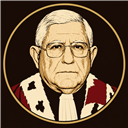
The photo archive presents family photographs and their captions. Newspaper clippings and documentary stills are identified in context. The cinematic hero composition, illustrated portrait icon and decorative cedar are presentation artwork; they are not evidence of a historical scene.
Source links identify the original publication; they do not imply that this archive owns or licenses that publication. No blanket reuse licence is claimed for photographs, clippings or external material.
Keeping the record accountable
Use the source links alongside an article to check its claims. When records differ, preserve the attribution and the uncertainty. Corrections should be supported by an identifiable document, publication, date or page reference.
The archive’s own summaries are credited to Judge Hassan Kawas Archive. An attribution to Hassan Kawas is reserved for material written or spoken by him, such as the sourced excerpt in the opening screen.